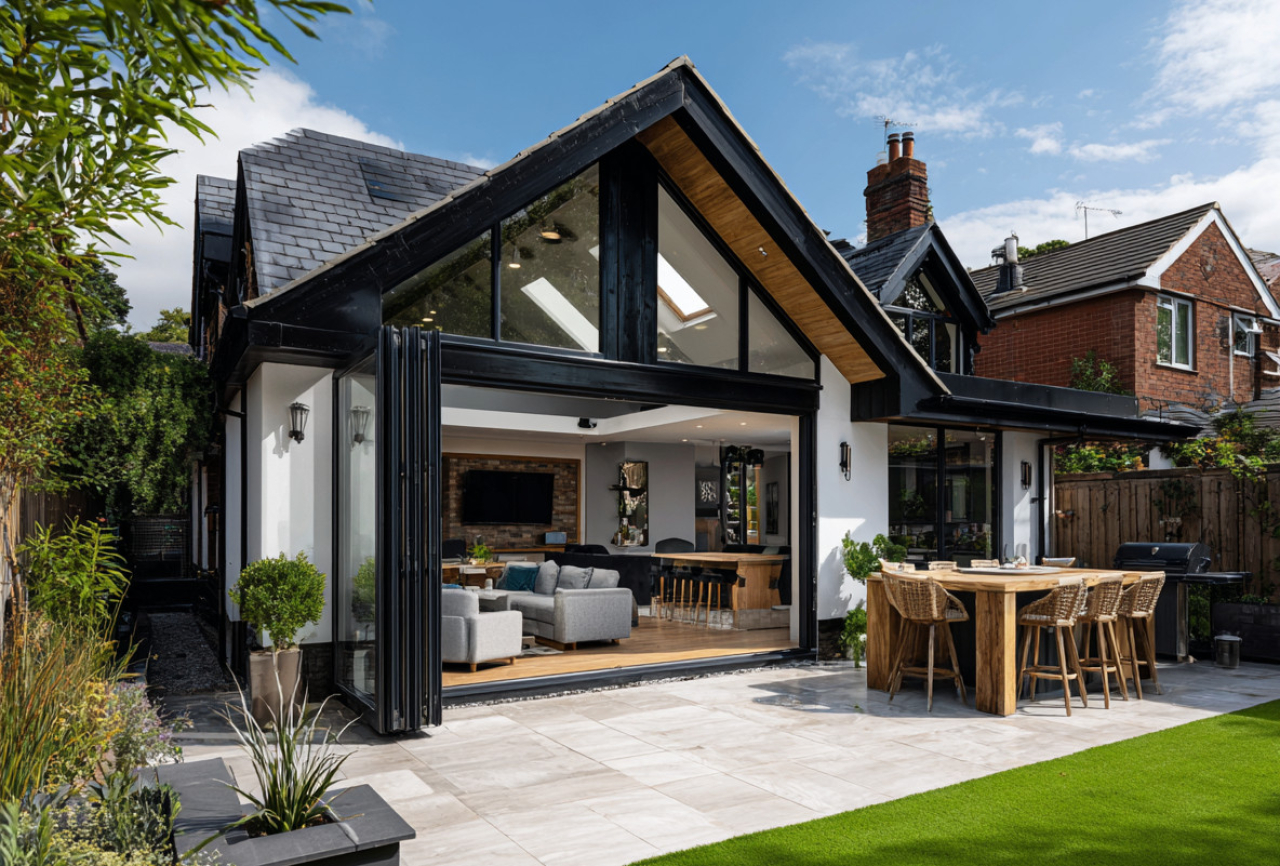
When choosing a bifold door, most homeowners focus on style and colour first. In reality, the panel configuration is what decides how the doors will feel day to day — how wide the walk-through opening is, where the “traffic door” sits, and whether you’ll actually fold the panels often or mostly use one leaf.
1) Start with the opening width (and be realistic about structure)
Bifold doors are typically designed around a structural opening that can safely carry the load above. If your plan involves widening an opening, you may need steelwork and additional making-good. That’s one reason the same door size can vary hugely in installed price between properties.
2) Understand the most common configurations
-
3-panel (e.g., 3-0-0 / 2-1 split): good for medium openings, often includes a main “traffic” leaf so you don’t have to fold everything back.
-
4-panel (3-1 / 2-2): popular for wider openings; a 3-1 gives a convenient everyday access door.
-
5+ panels: useful for very wide spans, but can increase stacking width and frame sightlines, and may feel heavier to operate.
A practical tip: if you’ll use the doors daily, choose a layout that includes a dedicated access leaf (often called a traffic door). Otherwise you may end up folding multiple panels just to step outside.
3) Think about where the doors will stack
Panels stack either to one side or split to both sides. One-side stacking gives a cleaner look on the “fixed” side, but the stack can take up valuable wall space. Splitting the stack can balance the room, but you’ll have two stacks instead of one. Also consider furniture, radiators, and curtain tracks.
4) Decide on inward vs outward opening
Most bifolds open outward to protect interior space and reduce draughts around internal floor finishes, but outward opening needs clear external space. Inward opening can work in some layouts, yet it may clash with furniture and can be less forgiving in bad weather.
5) Don’t forget the threshold and floor build-up
A lower threshold looks great and improves flow, but it must be detailed properly with drainage and external falls. Your finished floor level (inside and outside) can influence both practicality and the final cost.
6) Budget beyond the doors
Many quotes focus on the frames and glazing, but homeowners get caught by extras: structural changes, plastering, external making-good, drainage tweaks, and new electrics or lighting. If your bifolds are part of a wider renovation, it helps to sense-check the overall spend using an extension cost calculator so the doors aren’t priced in isolation.
Choosing the right layout is about how you’ll live with the doors, not just how they look in a brochure. Start with your opening size, prioritise a usable access leaf, plan the stacking position, and keep thresholds and “hidden” building work in mind — that’s how you get a bifold setup that feels effortless every day.