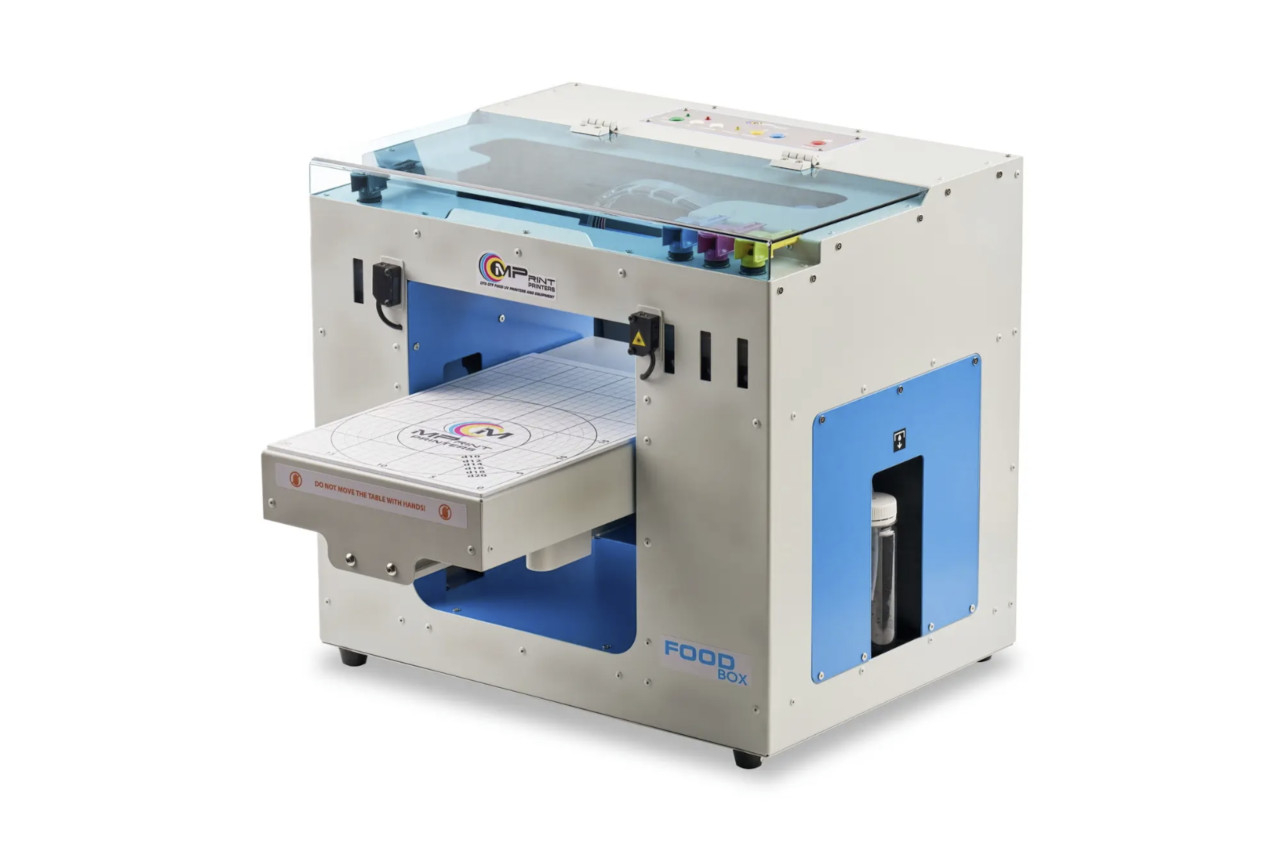
For confectionery studios, bakeries, and cake makers, the ability to print sharp, full-color images directly onto edible surfaces has become a genuine competitive advantage. Custom logos on macarons, photo-realistic portraits on cakes, and intricate branded designs on gingerbread are no longer reserved for large industrial producers — they're now within reach of small and mid-sized food businesses, thanks to compact flatbed edible printers like the FoodBox from MPrint (mprint-dtg.com/cat/food-printers).
What Sets the FoodBox Apart
The standout feature of the FoodBox is its automatic height adjustment system. A laser mechanism detects the exact height of each product placed on the printing table, then automatically repositions the table so the printhead sits at the optimal working distance — accurate to within 5–7 mm of surface variation. This eliminates the manual guesswork and trial-and-error calibration that slows down many competing edible printers, making the FoodBox especially valuable in busy production environments where consistency and speed matter.
The printer accommodates products up to 16 cm in height and offers a generous 20 × 30 cm print area, making it suitable for everything from individual cookies to larger cake toppers. It uses a CMYK edible ink system with an integrated continuous ink supply (CISS), which keeps per-unit printing costs low while maintaining vivid, food-safe color output. Connectivity is via a simple USB interface, and the unit requires only a modest 45 × 60 cm of workspace, running on standard 230V power at just 50W.
In terms of throughput, the FoodBox can process up to 250 items per hour in batch mode — a productivity level that lets small studios take on wholesale and event orders that would previously have required outsourcing to larger printing operations.
Who It's For
The FoodBox is built with confectionery studios, bakeries, cafés, cake designers, and small-to-mid scale food producers in mind — businesses that need reliable batch printing capability but don't require (or want to pay for) industrial-scale equipment. It's a natural fit for anyone looking to offer personalized cakes, branded corporate treats, event favors, or seasonal designs without turning to costly outsourced printing services.
Package and Support
Every FoodBox unit ships at €2,700 (excluding VAT) and includes the printer itself, connecting cables, two printheads, and a full user manual. MPrint backs each purchase with pre-shipment testing, setup assistance, and hands-on training, ensuring new owners can start producing print-ready confectionery from day one.
Getting Started
Businesses interested in adding edible printing to their production line can view full specifications, compare the FoodBox against MPrint's other models — including the compact Junior Food, the larger-format Aternis, and the edible-paper-focused Sugarer — and request a consultation directly on the MPrint food printers page.
With its combination of automatic calibration, solid throughput, and manufacturer-backed support, the FoodBox offers a practical entry point into professional edible printing for businesses ready to expand what they can put on a plate.