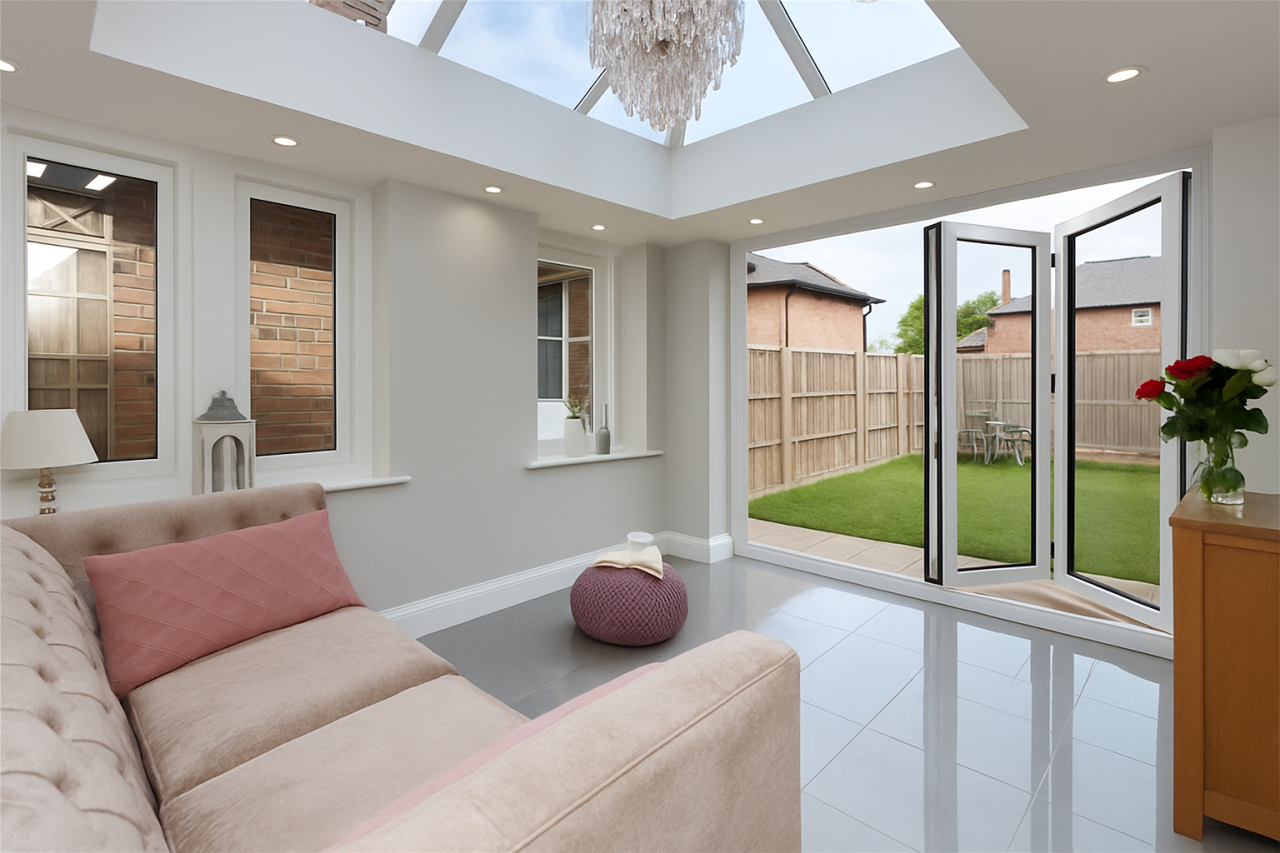
An Orangery usually combines a partially solid structure (for example dwarf walls or brick piers) with large glazed areas and a roof design that often includes a lantern. The key idea is comfort: many homeowners want a space that feels like part of the home — not a room that swings between too hot in summer and too cold in winter. That’s why modern orangeries are often specified with better insulation and more “extension-like” detailing than older conservatory builds.
Orangery vs conservatory: what really changes the price?
Although both add light and extra living space, pricing differences typically come from specification rather than just size. Orangeries often involve more structural work: stronger roof support, additional masonry elements, and roof lantern installation. Conservatories can still be upgraded, but if you’re aiming for a room you can use comfortably all year, the spec tends to move closer to orangery territory anyway.
The biggest cost drivers (and what installers don’t always highlight)
Roof choice and insulation are major variables. A lantern roof can look stunning, but the brand, glazing type, and structural requirements can change the total by a meaningful amount. Doors and glazing also swing costs: aluminium vs uPVC vs timber, sliding vs bifold, and upgrades like solar-control or triple glazing.
Then there are the “quiet” budget items that decide whether a quote is genuinely comparable:
-
Groundworks and drainage (especially if there’s a manhole or level changes)
-
Electrics and lighting (spots, sockets, exterior lighting)
-
Heating and ventilation (radiator moves, underfloor heating, extractors)
-
Finishing (plastering, making good, flooring allowances)
A common mistake is comparing a cheap “shell” quote against a more complete quote that includes these essentials. Before choosing a contractor, ask each firm to confirm what is included under installation, what is excluded, and whether the quote assumes easy access and standard ground conditions.
Planning and Building Regulations: don’t assume
Many projects can be possible under permitted development, but this depends on the property, location, and the design. Building Regulations may apply depending on how the space is built and how it connects to the existing home. Treat compliance and paperwork as part of your comparison — it often signals professionalism and reduces risk later.
A practical way to benchmark your budget before requesting quotes
If you build a quick estimate range first — based on size, roof type, door choice, and intended year-round use — you’ll be in a stronger position to spot quotes that are missing key items or priced like a premium national brand without premium specification. To calculate a guide range quickly and compare options, you can use this free tool: Extension Cost Calculator.