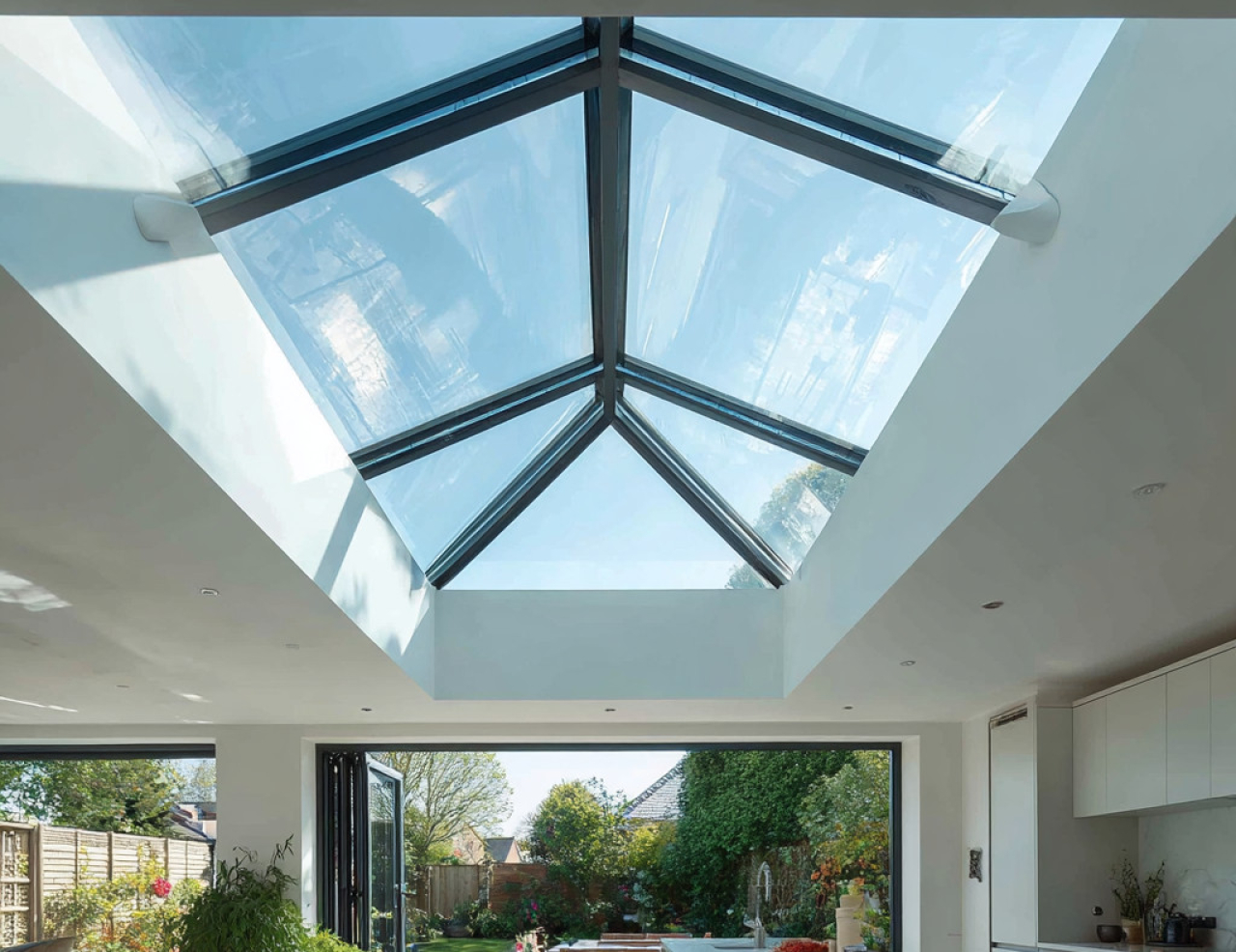
One of the biggest design decisions in an orangery is how much roof glazing to include. Roof lanterns have become popular because they make a space feel expensive fast: more sky view, more daylight, and a cleaner “architectural” ceiling line than older conservatory styles. If you’re building a kitchen-diner or a living space where people actually spend hours, that extra daylight can completely change the mood of the room.
However, roof glazing also changes comfort, which is why this choice matters more than it first appears. Broadly, you’re balancing two forces: heat loss (mainly in winter) and heat gain (mainly in summer). Roof glass tends to be more exposed than vertical glazing. That means it can lose more warmth on cold nights and let in more direct sun on bright days. It doesn’t mean roof lanterns are a bad idea—far from it—but it does mean the glazing spec and ventilation plan need to be treated as “core”, not “nice extras”.
If your orangery faces south or west, overheating can sneak up on you. People often imagine summer comfort as “open the doors and it’s fine”, but that doesn’t always work if the room is catching sun from above for many hours. This is where solar control glazing becomes a practical upgrade, not a luxury. It can reduce glare, help prevent the room turning into a sauna, and protect furniture and flooring from UV-related fading. In many EU markets, solar control and shading strategies are discussed earlier as standard design thinking, especially where hotter summers are normal. In the UK, it can still be presented as optional, so it’s worth raising the subject yourself if your layout makes the room sun-heavy.
A more solid roof (or a more insulated perimeter roof with fewer glazed sections) often creates a calmer temperature profile. The trade-off is obvious: less sky view, but typically more consistent comfort. This route can suit households that want the orangery to behave like a normal “main room” all year—especially if it becomes a dining room, snug, or a space where people work from home.
There’s also a sound factor that rarely gets mentioned until after installation: rain noise. Some homeowners love the atmosphere; others find it distracting. A more insulated roof perimeter can reduce that noise. Again, it’s not about right or wrong—it’s about “what would annoy you after week two”.
Ventilation deserves its own paragraph because it’s where many designs fail quietly. Warm air rises, so roof vents or opening sections up high can make a room feel dramatically more comfortable. If the orangery connects to a kitchen, you also need a plan for moisture and cooking odours—whether that’s discreet mechanical extraction, opening roof sections, or a layout that stops warm air getting trapped.
The most reliable approach is to decide what you want the room to do. If you want maximum “wow” and you love daylight, a roof lantern can be perfect—just spec solar control if the sun is intense and plan ventilation. If you care more about stable temperature and “extension feel”, a more solid roof approach can be smarter.
If you want a quick reality-check on how these choices affect overall cost, the Double Glazing Cost Calculator can help you build a rough spec and see an estimated range before you compare installers. It won’t replace a site survey, but it stops you comparing quotes with completely different assumptions.